9. March 2026
More Than Skin Deep:
Why the Consultation is the Most Important Part of Any Aesthetic Treatment
By Lee Hemmings, RN, MRCN, NMC-Registered Advanced Nurse Practitioner in Aesthetics
In the world of medical aesthetics, it is easy to focus on the injectable, the laser, or the device — the treatment itself. But in my years of practice as an Advanced Nurse Practitioner, one thing has remained consistently clear: the consultation is not a formality. It is the very foundation upon which safe, ethical, and effective treatment is built.
Aesthetic medicine in the United Kingdom is undergoing significant regulatory reform. The landscape has shifted considerably since the publication of the Keogh Review (2013), and the introduction of new licensing requirements for non-surgical cosmetic procedures in England — most recently progressed through the Health and Care Act 2022 — has brought the consultation process into sharper focus than ever before. As practitioners, we must understand not only why thorough consultation matters clinically, but why it is a legal, ethical, and professional imperative.
What Does a Proper Consultation Actually Involve?
A consultation in medical aesthetics is far more than asking a patient what they want and showing them a before-and-after photo album. It is a structured, clinically-informed interaction that encompasses medical history-taking, psychological assessment, treatment planning, risk discussion, and the facilitation of genuinely informed consent.
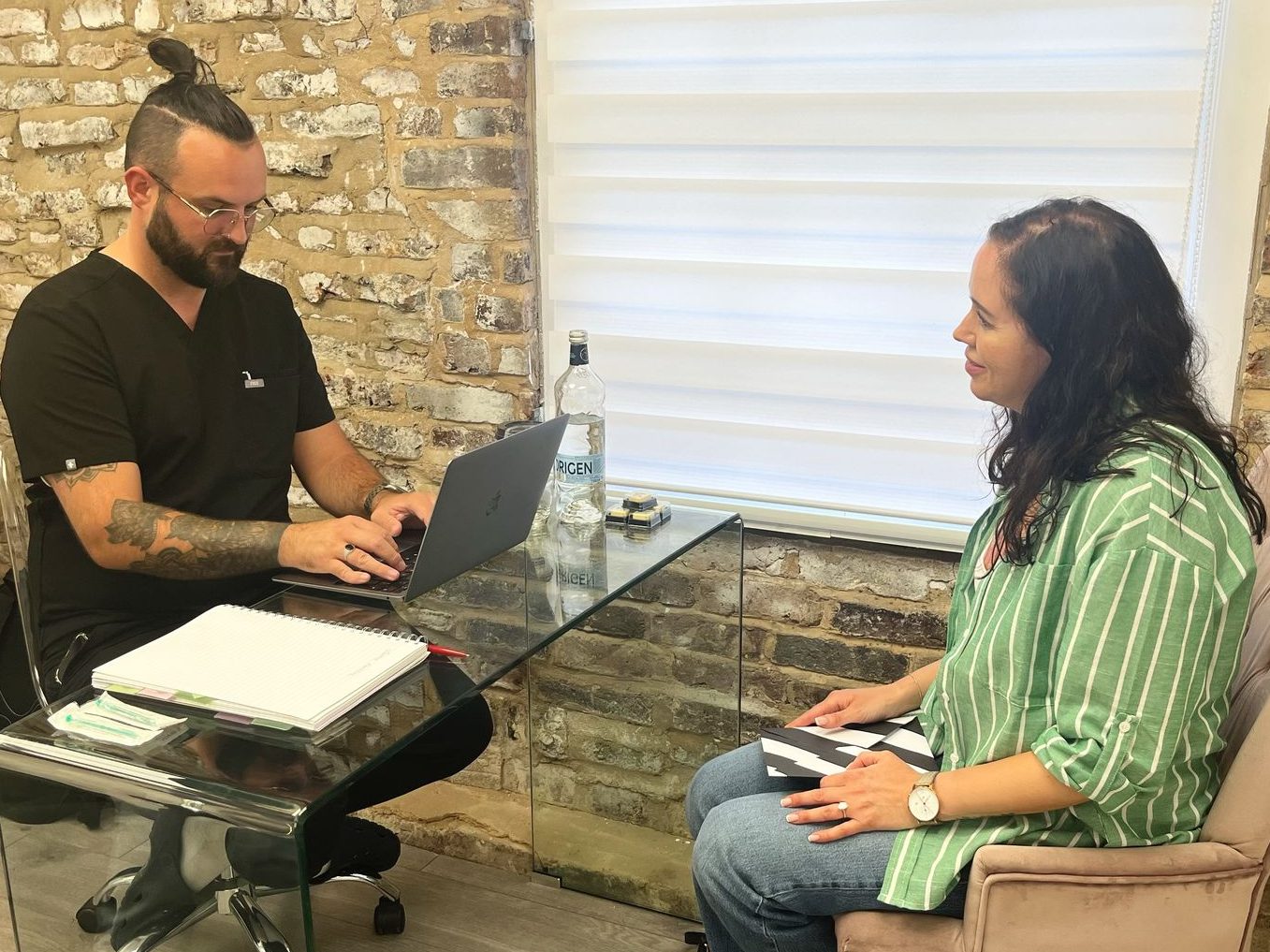
At minimum, a comprehensive aesthetic consultation should include:
- A full medical history, including current medications (particularly anticoagulants, immunosuppressants, and herbal supplements), allergies, and relevant past medical and surgical history
- Assessment of contraindications specific to the proposed procedure — for example, active skin infection, certain autoimmune conditions, pregnancy, or a history of keloid scarring
- A structured psychosocial assessment, including screening for body dysmorphic disorder (BDD) using validated tools such as the BDDQ or the Cosmetic Procedure Screening Questionnaire (COPS)
- Discussion of realistic outcomes, including limitations of treatment and the natural variation in individual response
- Full explanation of risks, complications, and what to do in the event of an adverse outcome
- Cooling-off period — particularly where there is any doubt about a patient's decision-making capacity, emotional state, or vulnerability
- Written, signed consent — obtained after adequate time for reflection, never on the same day as treatment in higher-risk cases
This is not bureaucracy. Each of these elements serves a real clinical and ethical purpose, and each has a legal basis within UK law and professional guidance.
The Legal Framework: Consent, Capacity, and the Montgomery Standard
For those of us working as nurses or other registered healthcare professionals, the legal basis for consent in clinical practice is well-established — and it applies fully in the aesthetic context, regardless of whether we are working in the NHS or independent practice.
The landmark Supreme Court case of Montgomery v Lanarkshire Health Board [2015] UKSC 11 fundamentally changed the legal standard for informed consent in the UK. The court held that a clinician must take reasonable care to ensure that a patient is aware of any material risks involved in a proposed treatment, and of any reasonable alternatives. Crucially, a risk is 'material' not simply if the clinician considers it clinically significant, but if a reasonable person in the patient's position would be likely to attach significance to it.
In practical terms for aesthetic practitioners, this means that a patient asking for lip filler must be told — clearly and in terms they understand — about the risks of vascular occlusion, tissue necrosis, infection, bruising, asymmetry, and the possibility that results may not meet their expectations. They must be told that hyaluronidase exists and what it is used for. The fact that vascular occlusion is rare does not remove our obligation to disclose it; it is unquestionably material to a patient's decision.
Failure to meet the Montgomery standard in aesthetic practice is not merely a professional failing — it is potential grounds for a claim in clinical negligence, even if the procedure itself was performed with technical competence.
Capacity and the Mental Capacity Act 2005
Practitioners must also be alert to issues of mental capacity. The Mental Capacity Act 2005 establishes the presumption of capacity in adults, but imposes a duty to assess capacity where there is reason to doubt it. In aesthetic medicine, relevant concerns may include significant mental health conditions, intoxication, acute emotional distress, or learning disabilities that affect understanding.
Equally important is recognition that a patient may have capacity in the legal sense — they can understand, retain, and weigh the relevant information — but may nonetheless be in a vulnerable psychological state that warrants particular caution. This is not merely a clinical nuance; it is ethically critical.
Body Dysmorphic Disorder: The Elephant in the Room
Body dysmorphic disorder (BDD) affects an estimated 1–2% of the general population, but research consistently suggests its prevalence is significantly higher in those seeking aesthetic procedures. Studies have estimated that between 7% and 15% of individuals presenting to aesthetic clinics may meet diagnostic criteria for BDD (Bowyer et al., 2016; Veale et al., 2016).
BDD is characterised by a preoccupation with a perceived defect in appearance that is not observable or appears slight to others. Patients with BDD are not simply perfectionist or demanding — they are experiencing a recognised psychiatric condition in which aesthetic intervention is unlikely to provide relief and may exacerbate distress. Treating a patient with undiagnosed BDD can cause serious psychological harm, and may lead to complaints, litigation, or regulatory investigation.
As an ANP, I incorporate validated screening tools into every new patient consultation. The COPS questionnaire (Veale et al., 2012), originally developed for cosmetic surgery, is brief, clinically validated, and appropriate for use in the aesthetic medicine setting. Where screening suggests possible BDD, I refer to the patient's GP and decline to proceed with treatment. This can be a difficult conversation — but it is the right one.
It is worth noting that practitioners who treat patients with known or suspected BDD not only risk harming the patient but may also face regulatory censure. For NMC-registered practitioners, treating a vulnerable patient without appropriate assessment would likely constitute a breach of the Code (NMC, 2018).
The Regulatory Landscape: Where We Are Now
The Keogh Review and Its Legacy
The 2013 Review of the Regulation of Cosmetic Interventions, led by NHS Medical Director Sir Bruce Keogh, found the UK aesthetic industry to be 'an unregulated market that needs significant reform.' The review highlighted the absence of mandatory practitioner training standards, the lack of licensing for non-surgical procedures, and the inadequacy of information provided to patients prior to treatment.
More than a decade later, significant progress has been made — but the industry remains, in some respects, insufficiently regulated. Botulinum toxin and other treatments that use prescription-only medicines (POMs), meaning that their administration must involve a prescriber. However, until recently, there was no requirement for the person administering the treatment to hold any clinical qualification whatsoever. This created a system in which a practitioner could legally administer potent prescription drugs after a weekend training course, so long as a prescriber somewhere in the chain had signed off on a prescription.
The Health and Care Act 2022 and Licensing Regulations
The Health and Care Act 2022 gave the Secretary of State the power to introduce a licensing regime for non-surgical cosmetic procedures in England. The Government subsequently announced that botulinum toxin injections and the administration of dermal fillers would require a licence, and that practitioners would need to meet defined training and competency standards.
As of 2026, the licensing framework is being progressively implemented. The consultation process forms a key component of demonstrating competency under these standards. Practitioners are expected to be able to evidence their consultation process, the risk assessments they carry out, and the consent they obtain — not simply as a paper exercise, but as a genuine demonstration of clinical decision-making. This consultation is ongoing between the government and key stakeholders meaning that ideas and changes are being discussed and how would be best to implement them. It's worth remembering these are not yet law, which means practitioners can still operate unethically and unsafely, putting people at risk of harm. Scotland have recently enshrined there regulations into Scottish law, so it would be wise for all practitioners to look at the key changes that have occurred there.
NMC Code and Professional Accountability
For nurses and midwives working in aesthetics, the NMC Code (2018) remains the cornerstone of professional conduct. The Code requires practitioners to prioritise people's interests, provide clear information to enable informed decisions, obtain consent before providing care, and act with honesty and integrity. These obligations do not diminish in the independent aesthetic setting — if anything, the absence of NHS oversight structures makes individual professional accountability all the more important. Recently, the NMC bought prescribing nurses and midwives in line with our colleagues registered with the GMC, GDC and GPhC - all treatments using prescription only medicines are required to have a face-to-face prescribing consultation prior to a prescription being issued. In my opinion this should of happened much sooner and is something that I have always done, even prior to this change.
Nurses working in aesthetics must also be mindful of scope of practice. The NMC expects practitioners to work within the limits of their competence. This means that an aesthetic nurse practitioner who has not received specific training in the management of vascular occlusion, for example, should not be performing procedures that carry a significant risk of that complication — unless they work in a setting with appropriate clinical oversight and emergency protocols in place.
The Ethical Dimension: Beneficence, Non-Maleficence, and Autonomy
Medical ethics is often framed through four principles — beneficence (doing good), non-maleficence (avoiding harm), autonomy (respecting the patient's right to make informed decisions), and justice (fair treatment). These principles are as applicable to aesthetic practice as to any other area of healthcare.
The consultation is where these ethical principles are operationalised. Beneficence is expressed through thorough assessment and honest treatment planning. Non-maleficence is demonstrated by identifying contraindications, declining inappropriate treatment, and ensuring patients are not placed at unnecessary risk. Autonomy is protected by ensuring that consent is genuinely informed, voluntary, and free from pressure — including the subtle commercial pressure that can exist in private aesthetic settings.
This last point deserves particular emphasis. Aesthetic clinics are businesses, and practitioners may face implicit — or explicit — pressure to convert consultations into bookings. I would argue that a practitioner who declines to treat a patient because treatment is not in that patient's best interests is demonstrating the highest form of professional integrity. A consultation that results in no treatment booked is not a failed consultation. It may, in fact, be the most successful clinical interaction of the day.
The ethical practitioner also gives thought to the broader social context in which aesthetic medicine operates. We work in an industry that is partly driven by social media, by filters, and by often unrealistic beauty standards. Part of our role in the consultation is to help patients anchor their expectations in reality — to gently challenge the notion that a particular feature is a 'flaw' that requires correction, and to explore whether the patient's motivations are intrinsic and stable, or reactive and external.
Practical Implications: Building a Gold-Standard Consultation Process
Given everything above, what does good practice look like in the real world? In my clinic, a consultation appointment is always offered prior to any treatment. I do not conduct consultations and treatment in the same session as standard practice — particularly for new patients, injectable treatments, or where any psychosocial concern has been raised.
My consultation process includes:
- A pre-consultation questionnaire sent to the patient in advance, covering medical history, medications, lifestyle factors, and previous aesthetic procedures
- Standardised BDD screening using the COPS questionnaire
- A structured conversation about motivations, expectations, and any relevant life events — I pay particular attention to recent bereavement, relationship breakdown, or significant life transitions, all of which may indicate that this is not the right time for elective aesthetic intervention
- Photographic documentation with informed consent for photography
- Facial analysis and treatment planning, explained clearly to the patient
- A detailed explanation of the proposed procedure, including what it involves, realistic outcomes, aftercare, and complications
- Written information provided for the patient to take away and review
- A signed consent form, with the patient's right to withdraw consent at any time made explicit
- A defined pathway for patients to contact the clinic in the event of any concern post-treatment
I also maintain contemporaneous records of every consultation and treatment. Not only is this a professional and legal requirement, but detailed records are an essential protection for both patient and practitioner in the event of a complaint or adverse outcome.
Conclusion: The Consultation as an Act of Care
The consultation in medical aesthetics is not a box to tick before the 'real work' begins. It is the real work. It is where clinical judgement is exercised, where trust is built, where legal obligations are discharged, and where ethical principles are enacted. It is where we determine whether treatment is appropriate, safe, and in the patient's genuine best interests.
As regulation tightens and the scrutiny on our profession increases, practitioners who have always approached the consultation with rigour, compassion, and clinical integrity have little to fear. Those who have treated it as a formality must now adapt — not simply to comply with regulation, but because our patients deserve better.
I became a nurse because I wanted to care for people. Medical aesthetics, done properly, is an extension of that same commitment — to understand a patient's needs fully, to be honest about what treatment can and cannot offer, and to protect them, even when that means declining to proceed. The consultation is where all of that begins.
References
- Bowyer, L., Krebs, G., Mataix-Cols, D., Veale, D. & Bhanu, V. (2016). A critical review of cosmetic treatment outcomes in body dysmorphic disorder. Body Image, 19, 1–8.
- General Medical Council (2020). Decision making and consent. GMC, London.
- Health and Care Act 2022. UK Public General Acts. London: HMSO.
- Keogh, B. (2013). Review of the Regulation of Cosmetic Interventions: Final Report. Department of Health, London.
- Mental Capacity Act 2005. UK Public General Acts. London: HMSO.
- Montgomery v Lanarkshire Health Board [2015] UKSC 11. Supreme Court of the United Kingdom.
- NHS England (2023). Licensing of non-surgical cosmetic procedures: guidance for practitioners.
- Nursing and Midwifery Council (2018). The Code: Professional Standards of Practice and Behaviour for Nurses, Midwives and Nursing Associates. NMC, London.
- Veale, D., Ellison, N., Werner, T.G., Dodhia, R., Serfaty, M.A. & Clarke, A. (2012). Development of a Cosmetic Procedure Screening Questionnaire (COPS) for Body Dysmorphic Disorder. Journal of Plastic, Reconstructive & Aesthetic Surgery, 65(4), 530–532.
- Veale, D., Gledhill, L.J., Christodoulou, P. & Hodsoll, J. (2016). Body dysmorphic disorder in different settings: A systematic review and estimated weighted prevalence. Body Image, 18, 168–186.
Lee Hemmings is an NMC-registered Advanced Nurse Practitioner working in General Practice and also specialising in medical aesthetics, with a postgraduate qualification including Independent Nurse Prescribing, Clinical Assessment and History taking. He practises in the United Kingdom - based in Halesowen and travels across the West Midlands.