23. March 2026
The Mirror Doesn’t Lie — But It Doesn’t Tell the Whole Truth Either
Men’s mental health and body image are deeply intertwined, yet remain profoundly underserved. As an Advanced Aesthetics Nurse Practitioner, I see this every day — and I believe it’s time we talked about it properly.
Advanced Aesthetics Nurse Practitioner • Lee Hemmings - RN, INP, MRCN • 8 min read
“In my clinic, I see men who have spent years feeling quietly ashamed of something they cannot name. They don’t book appointments to chase some fantasy — they come because how they feel about their appearance is quietly eroding the quality of their lives. This post is for them, and for every man who has never felt that aesthetic care was something he was allowed to want.”
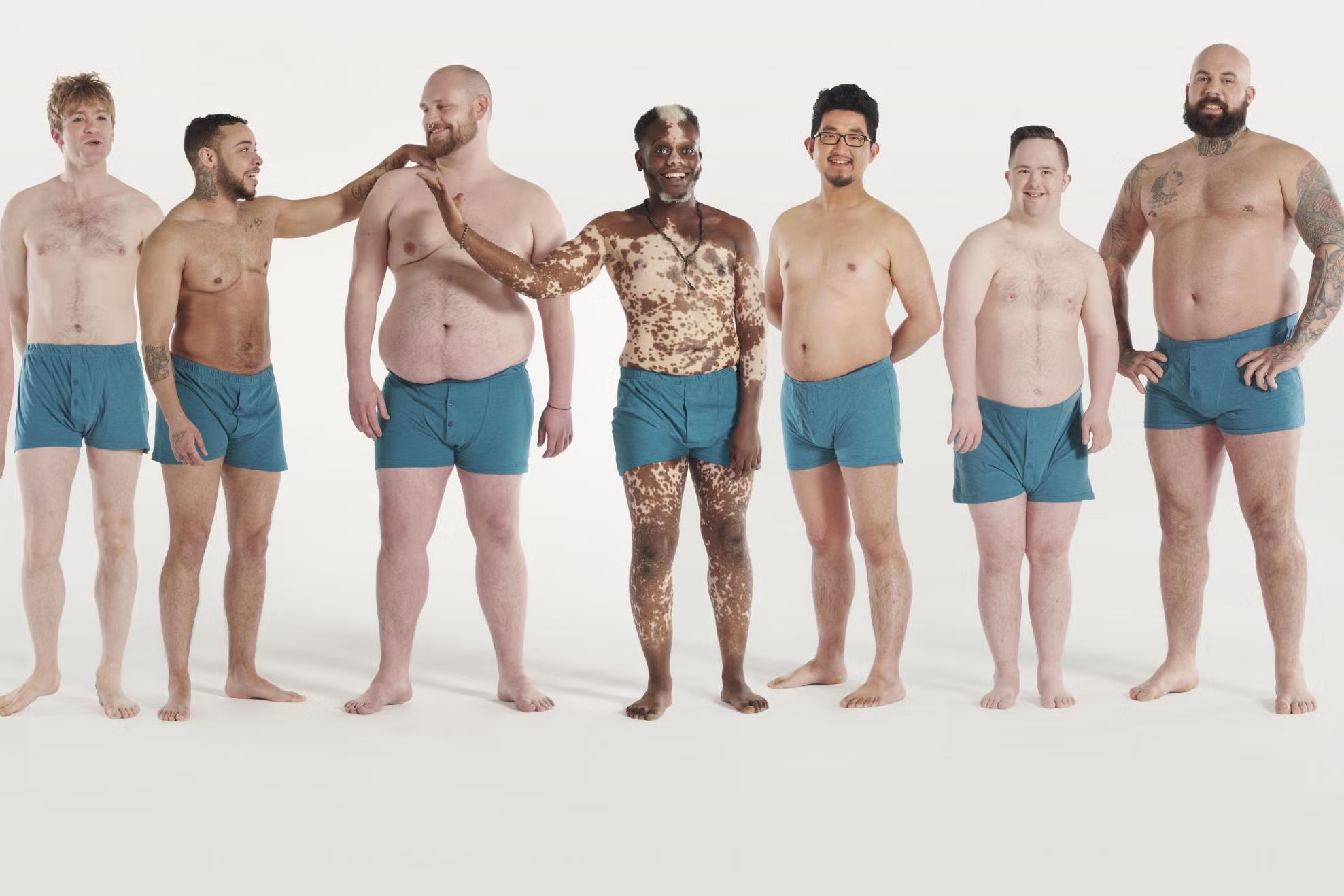
A Silent Crisis Hidden in Plain Sight
Body image — how we think and feel about our physical selves — is not, as many assume, a concern that belongs predominantly to women. The evidence tells a different, more uncomfortable story. Millions of men in the United Kingdom are quietly struggling, and the silence around this is costing them dearly.
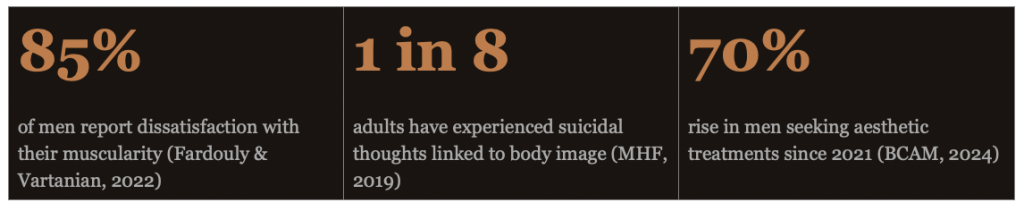
A major national survey conducted by the Mental Health Foundation and YouGov, involving over 4,500 UK adults, revealed striking figures. More than one in five adults reported that images in advertising had caused them to worry about their body image, and one in eight adults had experienced suicidal thoughts related to body image concerns (Mental Health Foundation, 2019). These are not statistics about women. They are statistics about people — and men are firmly included.
Research estimates that between 30% and 40% of men are anxious about their weight, whilst up to 85% report dissatisfaction with their level of muscularity (Fardouly and Vartanian, 2022). Yet despite these figures, men remain disproportionately unlikely to seek help, largely because body image distress has been culturally coded as a feminine concern — leaving men with nowhere to turn and no language to describe what they’re experiencing.
Key Statistics at a Glance
What the Research Actually Tells Us
Body image concerns in men are not trivial, nor are they vanity. They carry well-documented clinical consequences. A scoping review published in Environmental Research and Public Health found that body image concerns in men — spanning muscularity ideals, thinness, and generalised appearance dissatisfaction — are significantly linked to depression, anxiety, and diminished self-esteem (Limbers et al., 2025). These are not peripheral associations; they represent genuine pathways to psychiatric morbidity.
The Muscularity Ideal and Its Consequences
Men are bombarded with cultural messages that equate physical size and leanness with masculinity, worth, and success. Social media has dramatically amplified these pressures. Research consistently shows that men who regularly engage with idealised body content online report significantly more negative body image than those who do not (Mental Health Foundation, 2019). The pressure to achieve a lean, muscular physique is not a lifestyle preference — for many men, it becomes an obsession.
At the more severe end of the spectrum lies muscle dysmorphia — sometimes called “bigorexia” — a form of body dysmorphic disorder (BDD) characterised by an obsessive belief that one’s body is insufficiently muscular or too small, regardless of actual physical appearance. The American Psychiatric Association formally recognised muscle dysmorphia in DSM-5 as a specifier within BDD (APA, 2013). It primarily affects men, typically emerging in late adolescence or early adulthood, and is associated with elevated rates of suicide attempts, depression, anxiety, and substance misuse, including anabolic steroid use.
Parliament’s Health and Social Care Committee noted in its landmark report on body image that body image dissatisfaction in men carries specific risks, including testosterone suppression and cardiovascular damage from long-term anabolic steroid use — a dangerous coping mechanism that too often flies under clinical radar (House of Commons Health and Social Care Committee, 2022).

The Help-Seeking Gap
Despite the scale of the problem, men face a compounded barrier to support: stigma. Research from the Mental Health Foundation confirms that men can “find it more difficult to talk about their mental health and to seek help” (Mental Health Foundation, 2019). Being open about body image concerns feels particularly fraught for men, who may fear appearing “unmasculine” or being dismissed. As a result, distress goes unspoken, unflagged, and untreated — sometimes for years.
“Body image issues are often viewed as a problem that disproportionately affects women — leaving many men reluctant to talk about their problems or seek professional help.”
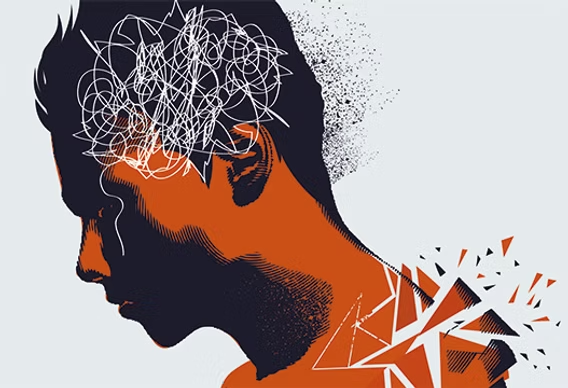
This is precisely where healthcare professionals — including those of us in aesthetics — have a responsibility to create an environment of genuine, nonjudgemental care.
Why Medical Aesthetics Has a Role to Play
I want to be transparent here, because this is nuanced clinical territory: aesthetic treatment is not a substitute for psychological support, and it should never be offered to someone experiencing active body dysmorphic disorder. Screening for BDD is an ethical cornerstone of responsible aesthetics practice, and one I take seriously in every consultation.
That said, for men who have a healthy, realistic relationship with their appearance but are experiencing distress caused by a specific, addressable concern — whether that’s facial ageing affecting workplace confidence, skin texture impacting self-esteem, or a feature that has caused years of quiet unhappiness — medical aesthetic treatment can be genuinely transformative.
The BAAPS Vice President noted in the 2024 annual audit commentary that many procedures now sought by men are “not just aesthetic but also functional — helping to maintain confidence, secure employment, and reduce anxiety associated with age-related bias” (BAAPS, 2024). This is not superficiality. This is men taking legitimate, considered steps to improve their quality of life
The Data: Men Are Already Here
The numbers reflect a meaningful cultural shift. A survey by the British College of Aesthetic Medicine reported a remarkable 70% increase in men seeking aesthetic treatments since 2021 (PolicyBee, 2025). Mintel data indicates that cosmetic procedures performed on men rose by 121% compared with 2020–21 (Mintel, 2024). Non-surgical procedures — particularly anti-wrinkle injections and skin-boosting treatments — are driving this growth, with men increasingly entering the aesthetic space with clear goals and realistic expectations.
Globally, the amount men spend on botulinum toxin treatments has risen 400% since 2000 (Hamilton Fraser, 2024). The stigma is not gone, but it is weakening — and as practitioners, we can help accelerate that change by making our clinics explicitly welcoming to men.
Aesthetic Treatments That Work for Men
Medical aesthetics is emphatically not a female domain. Below are some of the treatments highly relevant to male patients, and the concerns they address:
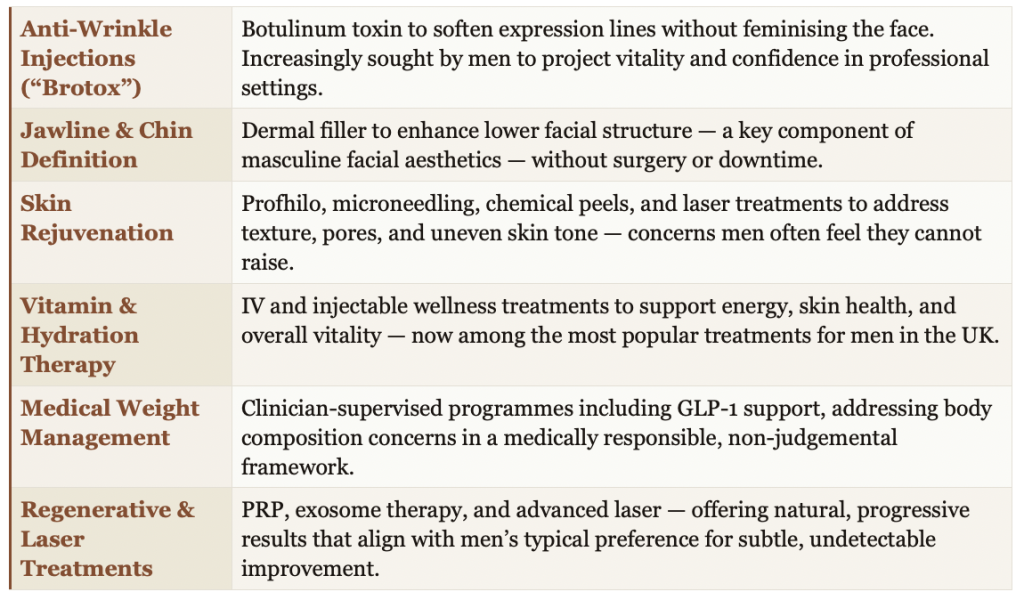
It is worth noting that men who come to clinic typically want to look like themselves, but better — refreshed, well-rested, defined. The goal is never to feminise or dramatically alter; it is to restore or refine. Understanding this distinction is fundamental to treating male patients well.
The Duty of Care: Screening and Safety
⚠ CLINICAL NOTE - It is essential that all patients — male or female — are properly screened before any aesthetic intervention. The House of Commons Health and Social Care Committee (2022) recommended a mandatory two-part consent process for non-surgical procedures, including a full medical and mental health history and a cooling-off period. In ethical practice, this is not optional — it is the standard of care. Any man presenting with signs of BDD or active psychological distress relating to appearance should be supported to access appropriate mental health services before aesthetic treatment is considered.
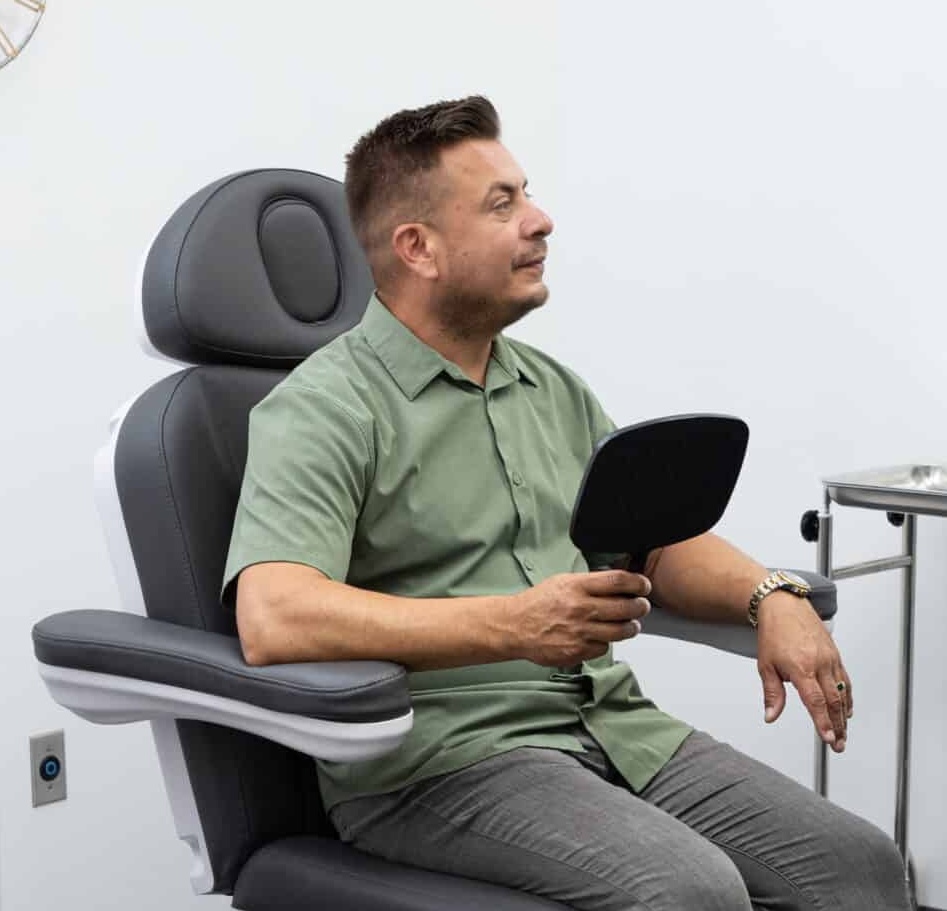
As a nurse prescriber and advanced practitioner, I am in a privileged position to hold space for these conversations. A good aesthetic consultation is not a sales appointment — it is a clinical encounter. That means taking time to understand not just what a patient wants to change, but why, and what they expect from the outcome. The NHS recognises that most people with BDD do not receive a diagnosis until 10 to 15 years after symptoms become serious (NHS, 2024) — partly because they seek cosmetic fixes rather than psychological support. Our role is to recognise that distinction and act accordingly.
Breaking the Stigma: What Needs to Change
The cultural tide is turning, but slowly. As practitioners and as a society, there are several things we can do differently.
First, we must normalise male body image distress as a legitimate clinical concern. General practitioners, occupational health teams, and mental health services need better training in identifying body image issues in men — a population that routinely underreports and underseeks.
Second, the aesthetics industry must actively signal its welcome to men. Clinic environments, marketing language, and consultation styles that are designed exclusively around female patients are not just a missed commercial opportunity — they actively discourage men from accessing care that might genuinely benefit them. Representation matters.
Third, we must be clear that wanting to look well is not weakness. The data from the British College of Aesthetic Medicine is unambiguous: the primary reason men pursue aesthetic treatment is to improve self-confidence (PolicyBee, 2025). Self-confidence underpins career performance, relationship quality, and mental wellbeing. Addressing it through safe, evidence-based medical intervention is not indulgence — it is healthcare.
The model of masculinity that insists men must suffer in silence and never attend to their appearance is not aspirational. It is harmful. As someone who works at the intersection of health, wellbeing, and aesthetics, I see its damage regularly. We can do better.
If you are a man who has been carrying quiet concerns about your appearance — concerns that are affecting your confidence, your relationships, or your daily life — please know that you are not alone, and you are not vain for feeling this way. A good aesthetics clinic will listen, assess properly, and only ever recommend what is clinically appropriate and in your best interest.
Equally, if you feel your concerns go deeper — if your thoughts about your appearance feel obsessive, distressing, or out of proportion — please speak to your GP in the first instance. The NHS offers CBT and other evidence-based treatments for body dysmorphic disorder, and reaching out is a sign of strength, not weakness.
You deserve to feel well in your body. And that statement is for everyone.
References
American Psychiatric Association (APA) (2013) Diagnostic and Statistical Manual of Mental Disorders, 5th edn. Arlington, VA: American Psychiatric Publishing.
British Association of Aesthetic Plastic Surgeons (BAAPS) (2024) Cosmetic Surgery Trends 2024: Facial Rejuvenation Surges While Men’s Procedures Decline. London: BAAPS. Available at: https://baaps.org.uk [Accessed 20 March 2026].
British College of Aesthetic Medicine (BCAM) (2024) cited in PolicyBee (2025) UK Aesthetics Industry Statistics. Available at: https://www.policybee.co.uk [Accessed 20 March 2026].
Fardouly, J. and Vartanian, L.R. (2022) ‘Body image issues affect close to 40% of men — but many don’t get the support they need’, The Conversation, 21 February. Available at: https://theconversation.com [Accessed 20 March 2026].
Hamilton Fraser (2024) Men’s Aesthetics: Redefining Masculinity and Confidence. Available at: https://www.hamiltonfraser.co.uk [Accessed 20 March 2026].
House of Commons Health and Social Care Committee (2022) The Impact of Body Image on Mental and Physical Health. London: House of Commons. Available at: https://publications.parliament.uk [Accessed 20 March 2026].
Limbers, C.A. et al. (2025) ‘Exploring Male Body Image: A Scoping Review of Measurement Approaches and Mental Health Implications’, International Journal of Environmental Research and Public Health, 22(6), p. 834.
Mental Health Foundation (2019) Body Image: How We Think and Feel About Our Bodies — Executive Summary. London: Mental Health Foundation. Available at: https://www.mentalhealth.org.uk [Accessed 20 March 2026].
Mintel (2024) Attitudes Towards Cosmetic Procedures — UK. London: Mintel Group. Available at: https://store.mintel.com [Accessed 20 March 2026].
NHS (2024) Body Dysmorphic Disorder (BDD). London: NHS England. Available at: https://www.nhs.uk [Accessed 20 March 2026].
Patient Claim Line (2025) Cosmetic Surgery: Key Statistics. Available at: https://www.patientclaimline.com [Accessed 20 March 2026].
PolicyBee (2025) UK Aesthetics Industry Statistics. Available at: https://www.policybee.co.uk [Accessed 20 March 2026].
Tod, D., Edwards, C. and Cranswick, I. (2016) ‘Muscle Dysmorphia: Current Insights’, Psychology Research and Behaviour Management, 9, pp. 179–188.
DISCLAIMER
This article is written for educational and informational purposes only and does not constitute medical advice. If you are concerned about your mental health or body image, please consult your GP or a qualified healthcare professional. © 2026 Lee Hemmings - Advanced Aesthetics Nurse Practitioner. All rights reserved.